
You see mushrooms everywhere these days. They’re on your plate, in your coffee, and inside little capsules with promises. But not all mushrooms are the same. Some are just good for eating, while others support daily wellness. There are also a few in the wild that can be risky or even dangerous.
This guide will take you through the main mushroom types. We’ll explain everything in the simplest way possible. You’ll learn how culinary, functional and wild mushrooms differ. We’ll also educate you on how to choose what fits your life.
1. What Are the Main Categories of Mushrooms?
To keep things easy, we’ll categorize mushrooms in three big groups.
- Culinary mushrooms are the ones you can cook and eat as food.
- Functional mushrooms are non-psychedelic fungi. They work as supplements. People use them for focus, stress relief, energy, and immune balance.
- Wild mushrooms are found in nature. Some are edible, some are useful, but many are unsafe without expert knowledge.
Check out our blog on “Top 10 Mushrooms for Health” to learn more about health-focused mushrooms.
2. Popular Culinary and Edible Mushroom Types
Here’s a list of the mushrooms you often see in the kitchen and at grocery stores. They add flavor, texture, and variety to meals.
- Button mushrooms: These small, white mushrooms are common. They have a mild flavor and work well in salads, pizzas, sauces, and omelets.
- Cremini mushrooms: Cremini mushrooms are just like button mushrooms, but with more depth. They’re slightly darker and have a richer, earthier taste. They’re perfect for making soups and gravies. They also taste great when grilled.
- Portobello mushrooms: These are a large, mature cremini mushrooms. They have large, meaty caps. Many people use them as a “vegetarian burger” swap because of their hearty texture.
- Oyster mushrooms: Oyster mushrooms grow in soft, layered clusters. They’re tender with a delicate flavor. They can be cooked quickly and work well in pastas, stir-fried, and pan-seared dishes. Some people love foraging. Are you one of them? If you, you’ll need to learn to recognize them. This blog on “Oyster Mushroom Identification Guide” can help.
- Shiitake: Shiitake mushrooms have a deep, savory aroma and strong umami flavor. They’re quite common in Asian cooking. They add richness to soups, broths, noodles, and rice dishes. Explore our Shiitake Collection at Essential Mushrooms.
- Maitake: Also called the Hen of the Woods, maitake grows in leafy, frilly clusters. They almost look like feathers. The mushroom has an earthy taste and works well in soups, stews, and stir-fries. Many people enjoy its texture when roasted or pan-fried.
3. Functional Mushrooms: Types and Everyday Benefits
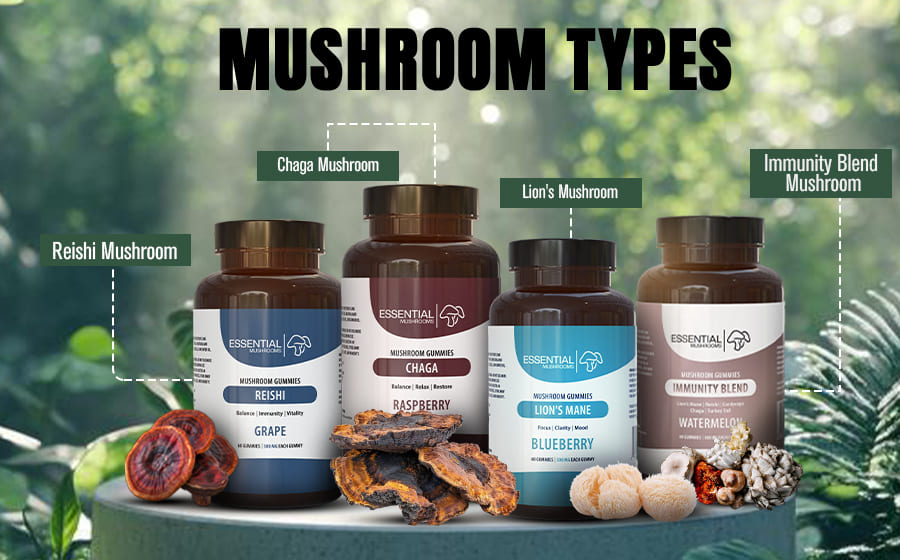
Functional mushrooms are what we specialize in. They’re non-psychedelic and legal. You don’t use them for fun. You use them as a daily wellness support. Functional mushroom types are often seen in capsules, gummies, tinctures, powders, and drink mixes. Here are some of the most popular types of functional fungi:
- Lion’s Mane: It looks like a white, shaggy ball in nature. Many people take it to support mental clarity, focus, concentration, learning, and memory. Grab your Lion’s Mane Capsule directly from here.
- Reishi: Often described as the “mushroom of calm,” people use Reishi to support relaxation and stress relief. It isn’t psychedelic, which means you won’t feel high or out of control after consuming it.
- Chaga: Chaga grows mostly on birch trees and looks like a dark, rough lump. You can use it to get more antioxidants, improve general wellness, and balance your immune system. Chaga is often available in capsules, teas, or powders.
- Cordyceps: This one is known for supporting energy naturally. It’s quite popular among athletes. You can take it before workouts, during busy workdays, or when you want a smoother and more balanced boost of stamina.
- Turkey Tail: Turkey Tail has the shape of a fan with colorful rings. As the name suggests, the mushroom looks like the tail of a turkey. People take it to improve gut health, immune response, and overall resilience.
4. Wild Mushrooms: Edible, Medicinal, and Toxic
Wild mushrooms are fascinating, yes, but they should also be treated with respect. Some wild mushrooms are:
- Edible, like morels and chanterelles
- Traditionally used for wellness, in teas or extracts
- Highly toxic, even in small quantities
The hard part of foraging is that many wild mushrooms look the same. One might be safe, but another, almost identical one, could cause severe harm. That’s why it’s best to:
- Avoid eating wild mushrooms you didn’t grow or buy from a trusted source like Essential Mushrooms
- Never rely on pictures alone
- Leave foraging to trained experts or go only with skilled guides
For most people, acquiring mushrooms from trusted farms and brands is the safest thing to do.
5. Which Mushroom Types Are Best for Daily Wellness?
For daily wellness support, functional mushrooms are usually the best fit. Why? Because they’re:
- Non-psychedelic
- Legal and widely available
- More consistent than wild finds
- Backed by growing research and traditional use
- Easy to take in capsules, gummies, tincture, and other supplements
What’s the point of guessing how to cooking them every day when you can add them to your routine in simple supplement form?
If you need help choosing between our product variants, read this: Best Way to Take Mushroom Supplements.
6. How to Choose the Right Mushroom Type
You don’t have to use every mushroom at once. Start with what you hope to get from functional mushrooms and build from there.
This simple guide should help:
- Lion’s Mane for focus and mental clarity
- Reishi for stress and calm
- Turkey Tail for immune support
- Cordyceps for natural energy and stamina
- Chaga for antioxidant support
Sort all options by goals at our “Shop by Benefits” section.
Some people start with one type of mushroom. Others prefer to use blends, covering several requirements at once. There’s no single “right” way. The best choice is the one that fits your body, schedule, and lifestyle.
7. Simple Overview Table: Culinary vs. Functional vs. Wild
Here’s a quick snapshot to keep things straight:
| Type | Main Use | Safety Note | Common Forms |
|---|---|---|---|
| Culinary | Food and flavor | From grocery and markets | Fresh, dried, cooked |
| Functional | Daily wellness | Use trusted, clearly labeled brands | Capsules, powders, gummies |
| Wild | Food or traditional | Can be toxic if misidentified | Foraged, always expert-guided |
When in doubt, stick with mushrooms that come from known, reliable sources and have clear labels and instructions.
Summing it Up
Mushrooms aren’t just a “thing.” They can be your dinner, daily support, or, in the wild, something to avoid without proper training. Let’s break down mushroom types one more time before we wrap this up.
- Culinary mushrooms add flavor and texture to your meals.
- Functional mushrooms give you simple ways to support focus, energy, immunity, and balance.
- Wild mushrooms are best left to experts unless you have proper guidance.
If you want a gentle, steady way to introduce functional mushrooms to your day, you might enjoy a balanced blend, such as the Essential Wellness Mushroom Capsule.
From there, you can move on to single mushrooms, blends, and benefits that match your goals. Soon, you’ll be able to build your own simple, mushroom-powered routine.
